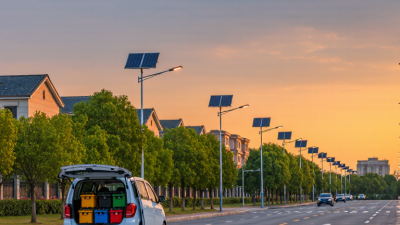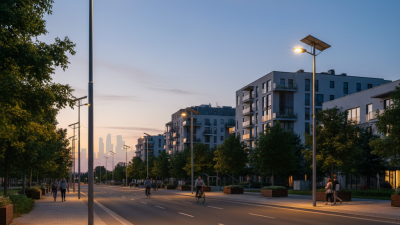
Solar street lights can make a driveway, garden path, or gate easier to see after sunset. They can do this without trenching a new power line. A Solar Street Light For Home typically combines a solar panel, battery, LED lamp, and controller. Its performance depends on panel placement, battery capacity, shade, weather, and the hours of light required. Simple idea. Real-world results vary.
For homeowners, the appeal is practical: installation may be less disruptive, and the lamp can operate without a direct connection to household electricity. A motion sensor or adjustable brightness can help conserve stored energy, while a sturdy pole and weather-rated enclosure matter in exposed locations. Check the product’s stated runtime and charging conditions, not only its brightness rating. A bright first hour means little if the lamp dims before dawn. Winter sunlight can be limited, too.
Choosing one still takes some thought. Measure the area, note nearby trees and roof shadows, and consider whether the light should cover a walkway or a wider entrance. Compare replaceable battery options, warranty terms, and access to spare parts. No solar fixture is maintenance-free; dust, leaves, and aging batteries can reduce output. It is easy to assume “solar” means reliable every night, but cloudy stretches may challenge that assumption. The right choice is the one that suits the site, not the most impressive specification sheet.
Why Choose Solar Street Lights for Home Use?
Residential paths and yards usually need about 3–10 lux for comfortable movement. A quiet garden path may work near 3 lux, while steps or a driveway often need closer to 10 lux. These figures describe light reaching the ground, not the lamp’s advertised brightness. Practical site checks often reveal uneven lighting, especially beneath trees or beside tall walls.
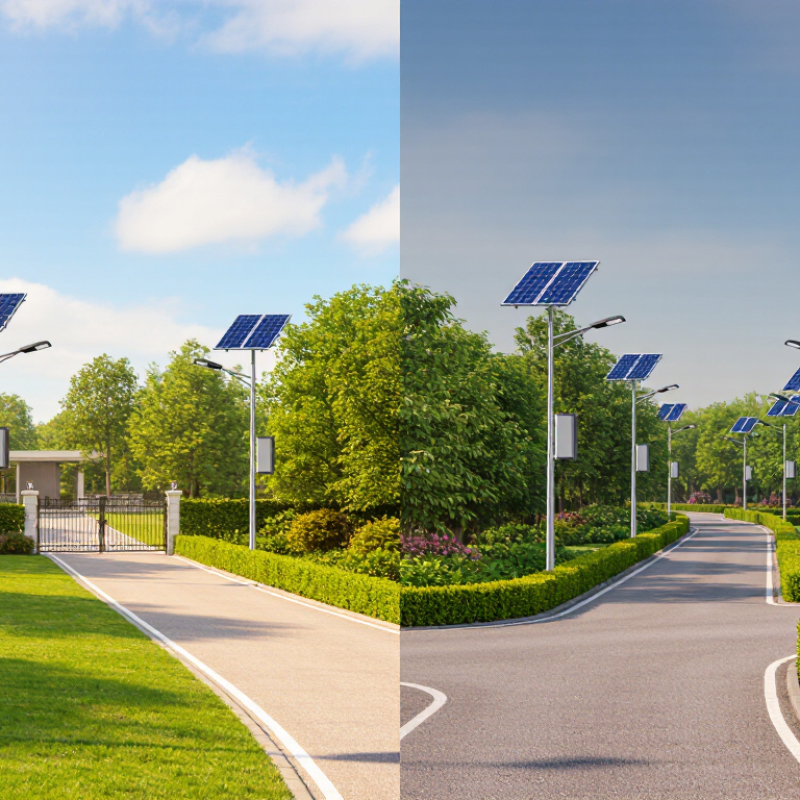
Solar street lights can suit homes because they avoid trenching and use daylight for daily charging. Their usefulness depends on panel placement, battery capacity, and winter sunlight. A lamp may perform well in summer but struggle after several cloudy days. I have also found that excessive brightness creates glare and darker areas beyond the beam. More light is not always safer. Beam spread and spacing matter.
Tips: Measure lux at walking height and on the ground. Keep panels clear of leaves and shadows. Choose warm, shielded light near windows. Test the lamp after sunset, then reassess it after rain or cloudy weather. A small adjustment may improve coverage more than a brighter fixture. Check local lighting guidance before installation.
Assessing Home Lighting Needs: 3–10 Lux for Residential Paths and Yards
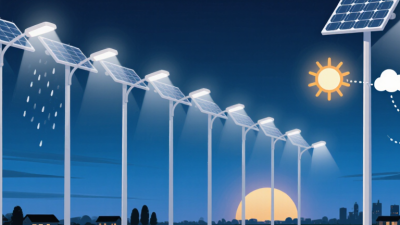
These illustrative planning points fall within the 3–10 lux range: about 3 lux for a path, 6.5 lux for a yard, and 10 lux for an entry or steps. Actual lighting needs vary with layout, surface, and local guidance; these values are not universal requirements. Solar lights can provide targeted illumination without trenching electrical wiring.
Why Choose Solar Street Lights for Home Use?
Modern LED fixtures commonly deliver about 100–200 lumens per watt, making efficacy a useful starting point when comparing solar street lights. Lumens describe visible light output; watts describe electrical power used. A higher figure can mean more light from a given amount of energy, but it does not guarantee better lighting around a driveway or garden.
Check what the rating measures. Some figures refer to the LED component, while others describe the complete fixture after losses from lenses, drivers, and heat. Ask for the fixture’s rated output and review its light distribution. A narrow beam may brighten a gate but leave the path beside it dim. Small detail, big difference.
For a home system, match the light output to the area and consider battery capacity, panel size, and expected nightly runtime. A 160 lm/W fixture may still perform poorly after several cloudy days if its battery is undersized. Look for clear test conditions and realistic runtime information, not just a headline number. It is easy to over-focus on efficacy; mounting height and shadows from trees can matter just as much. The numbers deserve a closer look.
| Lighting technology | Typical efficacy (lumens per watt) |
Approx. input for 1,000 lumens | Energy for 10 hours at that output |
Home-use perspective |
|---|---|---|---|---|
| Incandescent | 10–17 lm/W | About 59–100 W | About 590–1,000 Wh | Uses substantially more energy for the same approximate light output. |
| Compact fluorescent (CFL) | 50–70 lm/W | About 14–20 W | About 140–200 Wh | More efficient than incandescent lighting, but not typically used in integrated solar street-light fixtures. |
| Standard outdoor LED fixture | About 80–150 lm/W | About 7–13 W | About 70–130 Wh | A practical range for many outdoor luminaires; optics, driver efficiency, and operating settings affect results. |
| High-efficacy LED fixture | About 150–200 lm/W | About 5–7 W | About 50–70 Wh | Can reduce energy demand, but confirm that the figure applies to the complete fixture rather than only the LED components. |
Values are approximate technology ranges, not guaranteed product ratings. Energy estimates assume constant output for 10 hours and are calculated from the listed efficacy; solar-light runtime and energy use vary with dimming, motion controls, battery condition, weather, and seasonal sunlight. For a meaningful comparison, check the fixture’s rated luminaire efficacy and photometric data.
Solar street lights can improve visibility near gates, driveways, and garden paths without extending household wiring. Their usefulness depends on correct sizing, not just lamp brightness. A practical design starts with nighttime energy demand. For example, a 20-watt light running for 10 hours uses about 200 watt-hours each night. This figure should include controller and battery losses.
Peak sun hours are not the same as daylight hours. Three to five peak sun hours means equivalent full-strength sunlight. A 100-watt panel may produce roughly 300–500 watt-hours daily under those conditions. After allowing for dust, heat, wiring losses, and cloudy weather, the usable energy will be lower. A cautious estimate adds 25–35% to the panel calculation. In the example above, a panel around 100–120 watts may be reasonable, but local conditions can change the result.
Watch the roof or pole position. Nearby walls, trees, and winter shadows can reduce output sharply. A panel facing open sunlight usually performs better than a larger panel placed in partial shade. Battery capacity also matters, especially when rain lasts several days. One reserve night may be insufficient in a cloudy region. This calculation is useful, but it is not perfect. Real homes often reveal details that a spreadsheet misses, such as dust after construction or a lamp staying on longer than planned. Sensor settings should be checked after installation. Sometimes, a smaller light with better control serves the pathway more reliably.
Solar street lights can brighten driveways, gates, and garden paths without trenching power cables. For home use, the battery often determines reliability more than the lamp itself. LiFePO₄ batteries offer stable performance, a long service life, and good tolerance for daily charging. The practical question is not simply whether the battery works, but how it performs after years of cloudy mornings and cold nights.
A 2,000-cycle rating may suit moderate household use, while a 5,000-cycle rating can support heavier daily operation. These figures usually depend on controlled testing conditions. Real weather is messier. High temperatures, deep discharges, poor charging settings, and constant undercharging can shorten battery life. A five-year claim may look impressive, but it needs careful context.
During installation checks, I would examine the battery enclosure, cable connections, and charge controller settings. Good ventilation and protection from standing water matter. The light should also provide enough illumination before sunrise, not only during the first hours after sunset. I used to focus mainly on cycle numbers, but that was too narrow. Battery capacity, discharge depth, local climate, and maintenance access deserve equal attention. Ask for test data, operating temperature ranges, and warranty conditions. A slightly smaller system with accurate specifications may prove more dependable than a larger unit with vague promises.
Why Choose Solar Street Lights for Home Use?
For home pathways, durability matters as much as brightness. During a practical installation check, an IP65 fixture handled dust, garden debris, and angled hose spray without visible water entry. Under IEC 60529, IP65 means complete dust protection and resistance to water jets from any direction. It does not mean submersion protection. That distinction is often missed.
LED longevity also supports lower maintenance. The U.S. Department of Energy’s Solid-State Lighting research reports that quality LED systems can deliver long operating life when heat is controlled. A 50,000-hour rating equals about 11 years at 12 hours nightly. However, this figure usually describes L70 performance, not total failure. L70 means the LED may still produce 70% of its initial light output. Read the fine print.
IES LM-80 testing measures LED lumen maintenance, while TM-21 projects future performance from those measurements. These standards improve credibility, but actual results depend on temperature, battery quality, charging cycles, and installation location. A fixture mounted beneath dense tree cover may charge poorly, even with efficient LEDs. Solar exposure is not always obvious.
Check the seal, cable entry, panel angle, and battery compartment before installation. A small gap can defeat strong housing protection. Also, 50,000 hours sounds permanent. It is not. Battery replacement may arrive much earlier.