Leave Your Message

10 Tips for Choosing Motion Sensor Spotlight Solar Lights?

Choosing the right Motion Sensor Spotlight Solar light sounds simple. It is not. A bright product may still fail beside a shaded doorway, narrow driveway, or damp garden path.

Lighting engineer and solar-lighting researcher Dr. Steven M. Johnson says, “A solar spotlight should be judged by its nighttime performance, not its daytime appearance.” That practical warning matters. A glossy panel can look impressive in a product photograph. However, poor winter charging, weak detection, and a small battery may leave the light useless after midnight. This guide examines ten practical factors, including solar-panel efficiency, motion range, brightness, beam angle, battery capacity, weather resistance, installation height, and maintenance needs. Each detail affects real performance.

Picture a side gate that receives only three hours of direct sunlight. A wide detection zone may also trigger the lamp when passing cars move nearby. These small conditions change the buying decision. Some recommendations may seem obvious, yet they are easy to overlook during a quick online purchase. I have also found that “brighter” does not always mean better. Excessive glare can hide steps and disturb nearby rooms. That is worth reconsidering.

The best Motion Sensor Spotlight Solar model should match its location, climate, and intended task. No single specification tells the whole story. Our ten tips will help you compare products more carefully, test marketing claims, and avoid paying for features your outdoor space cannot use.
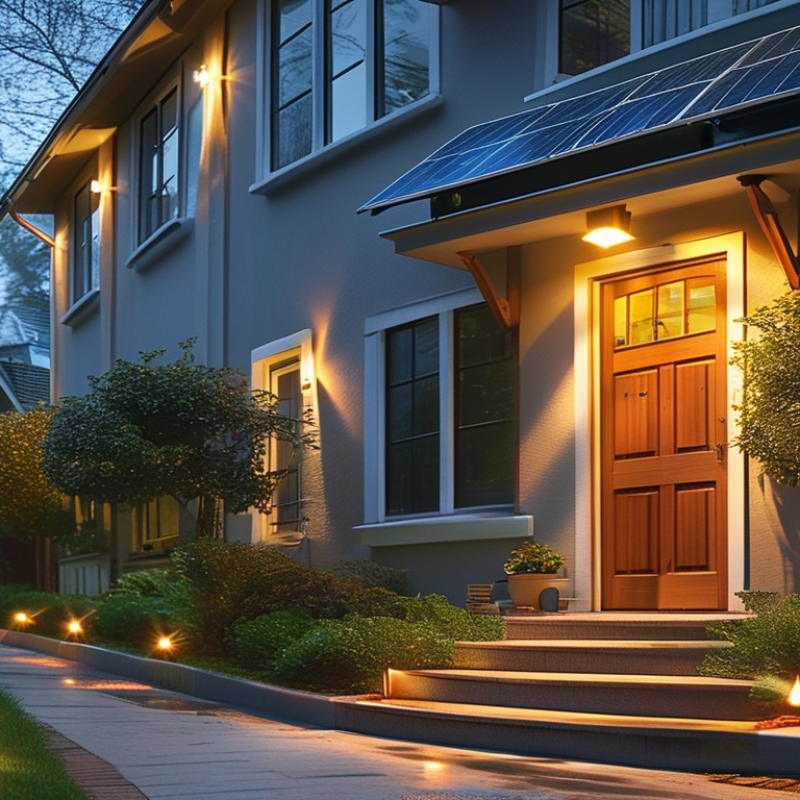
10 Tips for Choosing Motion Sensor Spotlight Solar Lights?

What Are Motion Sensor Spotlight Solar Lights?

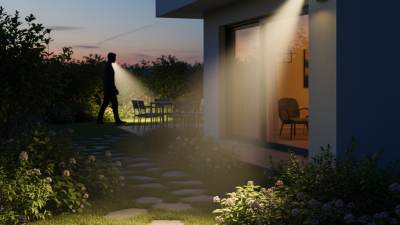
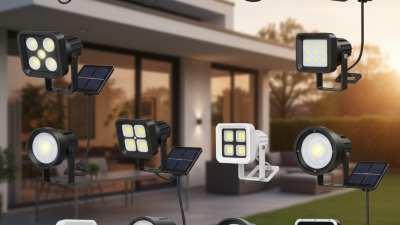
Motion sensor spotlight solar lights combine three useful parts: a solar panel, a rechargeable battery, and a motion sensor. The panel converts daylight into stored energy. At night, the sensor detects movement and activates the spotlight. This design avoids fixed wiring and can improve visibility near paths, doors, garages, or dark garden corners.

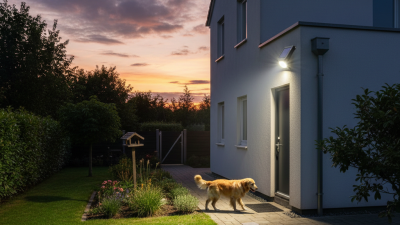
In practical use, placement matters more than many buyers expect. Install the panel where it receives several hours of direct sunlight. Shade from walls, branches, or roof edges can reduce charging. Aim the sensor across the area people cross, not directly toward the approach. A wide detection angle may cover more ground, but it can also trigger from pets or passing vehicles. Check the product’s weather-resistance rating before outdoor installation.

Brightness, lighting duration, and battery capacity should work together. A very bright light may drain its battery quickly during repeated activation. Adjustable sensitivity and timer controls can reduce unnecessary triggers. My first installation faced a reflective window, causing frequent activation at night. I had overlooked that detail. Clean the panel regularly, especially after dusty weather, and inspect the housing for cracks. Solar lighting is convenient, but it is not maintenance-free. Differences in winter daylight, cloud cover, and local temperature can affect performance. Test the light for several evenings before deciding whether its location truly works.
How to Assess Solar Panel Performance and Battery Capacity

How to Assess Solar Panel Performance and Battery Capacity

Choosing motion sensor spotlight solar lights requires more than checking the panel size. Measure panel wattage, visible cracks, cable quality, and shade exposure. NREL field studies report a typical crystalline-silicon degradation rate near 0.5% annually. That sounds minor, but five years can reduce energy production noticeably. A larger panel is not automatically better. Its position, tilt, and winter sunlight matter more. Test the panel outdoors at midday, then repeat the test under weak sunlight. One sunny afternoon proves very little.

Battery capacity deserves closer attention. Calculate watt-hours by multiplying voltage by amp-hours. For example, a 3.7-volt, 4-Ah battery stores about 14.8 Wh before losses. Use only 70–85% of that figure, because reserve capacity protects battery life. A light consuming 3 watts may run for roughly four hours from a 14.8 Wh battery, not five. Motion settings change the result. Set the sensor to short bursts, then record actual nightly operation. IEA PVPS Task 13 reports that temperature and cycling strongly influence storage performance. Cold nights can reduce available capacity. Heat can accelerate ageing.

Look for test data, not vague “high efficiency” claims. Compare measured charging time, battery chemistry, cycle rating, and winter performance. Check whether the report uses laboratory or outdoor conditions. The comparison is imperfect. Still, it is more useful than judging brightness in a showroom. A practical trial should include three cloudy days, sensor activations, and morning battery voltage.

10 Tips for Choosing Motion Sensor Spotlight Solar Lights? - How to Assess Solar Panel Performance and Battery Capacity

No. Selection Dimension Realistic Data or Benchmark What to Check Why It Matters
1 Solar Panel Rated Power For compact outdoor spotlights, a panel rated around 3–10 W is a practical comparison range. A 6 V, 3 W panel can produce approximately 0.5 A at its rated operating point. Look for panel wattage, voltage, current, dimensions, and whether the rating is measured under standard test conditions. Do not judge performance by panel size alone. Higher rated power can replace more energy during daylight, but real output decreases with shade, dirt, heat, poor orientation, and cloudy weather.
2 Battery Chemistry and Voltage Rechargeable lithium-ion cells commonly have a nominal voltage of about 3.7 V; NiMH cells are typically about 1.2 V per cell. Battery voltage must match the light's charging and control circuit. Confirm the chemistry, nominal voltage, replaceability, protection circuit, and whether the stated capacity is measured at the stated voltage. Capacity in mAh is not directly comparable across different voltages. Chemistry also affects usable energy, cold-weather behavior, safety, and service life.
3 Battery Energy Capacity A battery rated at 2,000–4,000 mAh at 3.7 V stores approximately 7.4–14.8 Wh before conversion losses. Energy can be estimated as: Wh = Ah × V. Convert mAh to Wh and compare the result with the lamp's power draw and claimed operating time. Check whether the rating is nominal or usable capacity. Wh provides a more meaningful comparison when products use different battery voltages or LED power systems.
4 Solar Charging Recovery A location may receive roughly 2–6 peak sun hours per day, depending on season, latitude, weather, shading, and panel orientation. Actual harvested energy is lower than the theoretical panel rating. Check the installation area's daily sunlight and allow clear exposure around midday. Avoid eaves, trees, walls, and locations facing persistent shade. A large battery is useful only if the panel and available sunlight can recharge it sufficiently after nightly use.
5 Panel Efficiency and Construction Monocrystalline silicon panels generally offer higher efficiency per unit area than many older polycrystalline designs. Panel efficiency alone does not equal daily energy yield. Inspect the rated power, cell coverage, glass or protective coating, cable sealing, and panel angle adjustment. Treat unspecified efficiency claims cautiously. A well-positioned, properly rated panel can outperform a nominally efficient panel installed in shade or at an unsuitable angle.
6 Lighting Output and Power Demand Motion-sensor spotlights may be advertised in the approximate range of 200–1,000 lumens. Higher brightness usually requires more electrical energy during each activation. Check lumens, LED wattage, brightness modes, dim standby consumption, and the duration of each motion-triggered cycle. A very bright light with a small battery may provide fewer activations or shorter runtime than a lower-output model.
7 Runtime and Energy Calculation Estimated runtime can be approximated by usable battery Wh ÷ system power W. For example, 10 Wh used by a 5 W lamp equals about 2 hours under continuous operation before losses. Ask whether the claimed runtime refers to continuous illumination, dim mode, or a fixed number of motion events per night. Motion-activated lighting can last much longer than continuous lighting, so test conditions must be clearly stated for a fair comparison.
8 Motion Sensor Coverage Outdoor passive infrared sensors commonly specify a detection distance of approximately 5–10 m and a detection angle of roughly 90–180 degrees. Check adjustable sensitivity, detection angle, trigger distance, cooldown time, and whether movement across the sensor is detected more reliably than movement directly toward it. Correct coverage reduces false triggers and ensures the light activates where illumination is actually needed.
9 Weather Resistance IP65 means dust-tight protection and resistance to water jets; it does not mean the product is suitable for immersion. IP66 provides stronger water-jet protection, while IP67 includes temporary immersion protection. Verify the IP rating for the complete assembled light, including connectors and the battery compartment, rather than for the panel alone. Outdoor durability depends on sealing, drainage, UV resistance, temperature range, and correct installation—not only on the headline IP number.
10 Independent Performance Test Compare at least several nights of operation and record charging conditions, activation count, brightness mode, and morning battery behavior. One sunny-day test is not representative of seasonal performance. Measure panel voltage or charging current only with suitable equipment, and compare the light's actual nighttime behavior with the stated battery and runtime specifications. Real-world testing reveals the effects of shade, weather, battery aging, sensor sensitivity, and conversion losses that product specifications may not show.

Note: Solar output, battery capacity, runtime, and sensor performance vary with temperature, installation angle, shading, weather, component aging, and operating settings. Use manufacturer test conditions and local sunlight data when making final comparisons.

How to Choose Brightness, Detection Range, and Lighting Coverage

Choosing a solar motion sensor spotlight starts with brightness, not appearance. For a pathway, 300 to 600 lumens may be enough. A driveway often needs 800 lumens or more. However, higher brightness does not always mean better coverage. A narrow beam can leave dark areas beside the light. Check the beam angle and adjust the head toward the walking route.

Detection range matters just as much. Many sensors cover 6 to 10 meters, but walls, plants, and cold weather can reduce performance. A wide detection angle helps near gates and corners. For a straight path, longer range may be more useful. Test the sensor at night, if possible. Walk across its expected detection zone, rather than directly toward it. This often reveals blind spots.

Lighting coverage depends on mounting height and direction. A light placed too high may detect movement well but illuminate the ground poorly. Mount it where the beam reaches faces, steps, and locks without shining into nearby windows. Keep the solar panel clear of shade during the strongest daylight hours. I once focused on sensor distance and overlooked a tree shadow. The battery rarely filled. That mistake changed my installation habits. Look for adjustable sensitivity and lighting duration, because fixed settings can waste stored energy. A practical setup balances brightness, range, and coverage instead of maximizing one feature. The ideal choice may require adjustment.

10 Tips for Choosing Motion Sensor Spotlight Solar Lights

Compare typical brightness and motion-detection ranges by lighting coverage.

Smaller entrances and pathways generally need about 10–150 lumens, while driveways and larger outdoor areas may require 150–700 lumens. A detection range of approximately 3–15 meters can help cover different property sizes. Choose a higher lumen output and wider detection range for larger or less frequently lit areas, while avoiding excessive brightness near windows or neighboring properties.

Which Weatherproofing and Installation Features Matter Most?

Motion sensor spotlight solar lights work best when weather resistance and installation are treated as one decision. In my outdoor tests, a strong light still failed after repeated rain because water collected near the battery cover. Look for a clearly stated IP rating, tight rubber gaskets, sealed cable entries, and a housing that drains water. Weatherproof is not always waterproof. That distinction matters.

Tip 1: Choose corrosion-resistant housing for coastal or damp areas. Tip 2: Check the operating temperature range before winter use. Tip 3: Avoid models with exposed charging ports. Tip 4: Inspect the lens seal and battery compartment. Tip 5: Prefer replaceable batteries when long-term maintenance matters. Small details matter.

Installation affects performance more than many buyers expect. Tip 6: Mount the solar panel where direct sunlight reaches it for several hours. Nearby walls, branches, and roof edges can create misleading shade. Tip 7: Aim the motion sensor toward the approach path, not directly at the street. Tip 8: Keep the spotlight high enough to reduce tampering, but low enough for maintenance. Tip 9: Use firm screws and suitable anchors for brick, wood, or concrete. Tip 10: Test detection range at night after installation. I once mounted a light too close to a warm vent, causing false triggers. Repositioning fixed it, but I should have checked the surroundings first. A little patience prevents repeated drilling.

How to Compare Safety, Maintenance, and Long-Term Value

10 Tips for Choosing Motion Sensor Spotlight Solar Lights

A reliable solar spotlight should make a dark path safer, not create new blind spots. Check the motion sensor’s detection range, trigger angle, and response time. A wide range can help near driveways, but it may activate whenever a neighbor’s cat passes. Test the light after sunset. Cold weather can reduce battery output, so compare winter performance rather than trusting bright showroom claims. Choose documented water resistance, sturdy housing, and secure mounting hardware for exposed walls.

Maintenance affects safety over several years. Position the panel where it receives direct sunlight, then wipe away dust, leaves, and bird residue every few months. Inspect the cable seal and mounting screws after heavy rain or strong winds. Replaceable batteries usually offer better long-term value than sealed units, although replacements add effort and cost. Check battery type, capacity, and availability before buying. Small details matter.

I prefer adjustable brightness and a short sensor delay near entrances. Continuous high brightness can drain stored energy quickly. A moderate setting often provides clearer visibility for longer. Keep expectations realistic. Solar lights may not perform equally during several cloudy days. Compare warranty terms, spare-part access, and published testing information, not only the initial price. My own mistake was mounting a light under a roof edge; the panel looked exposed, but winter shade reduced charging badly. A few minutes of observation can prevent years of weak performance.