How to Choose the Best Outdoor Solar Floodlights for Your Home?
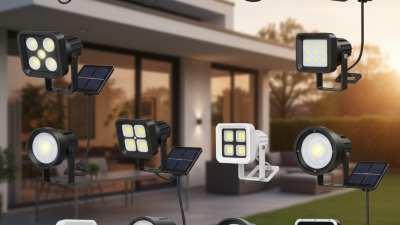
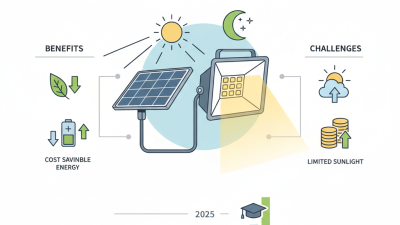
Choosing the right Outdoor Solar Floodlights can enhance the safety and aesthetics of your home. These lights are energy-efficient and environmentally friendly. They provide illumination without the hassle of wiring or high electricity bills. In recent years, solar floodlights have become increasingly popular due to their versatility and ease of installation.
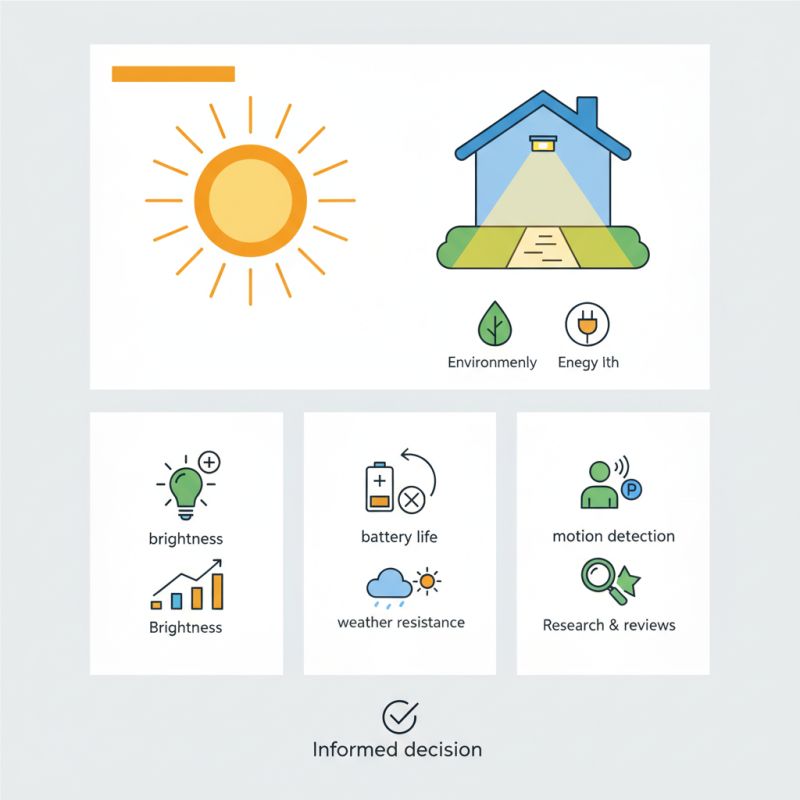
When selecting the best Outdoor Solar Floodlights, consider factors like brightness, battery life, and motion detection features. Different models offer varying levels of luminosity, so it’s essential to understand your specific needs. High-quality lights should withstand different weather conditions and provide reliable performance over time. Reflect on your outdoor space and how much light you realistically require.
Not all solar floodlights are created equal. Some may fail to deliver the promised brightness. Do thorough research and read customer reviews to gauge reliability. Take your time to make an informed decision that not only illuminates your property but also meets your expectations in quality and performance.
Factors to Consider When Choosing Outdoor Solar Floodlights
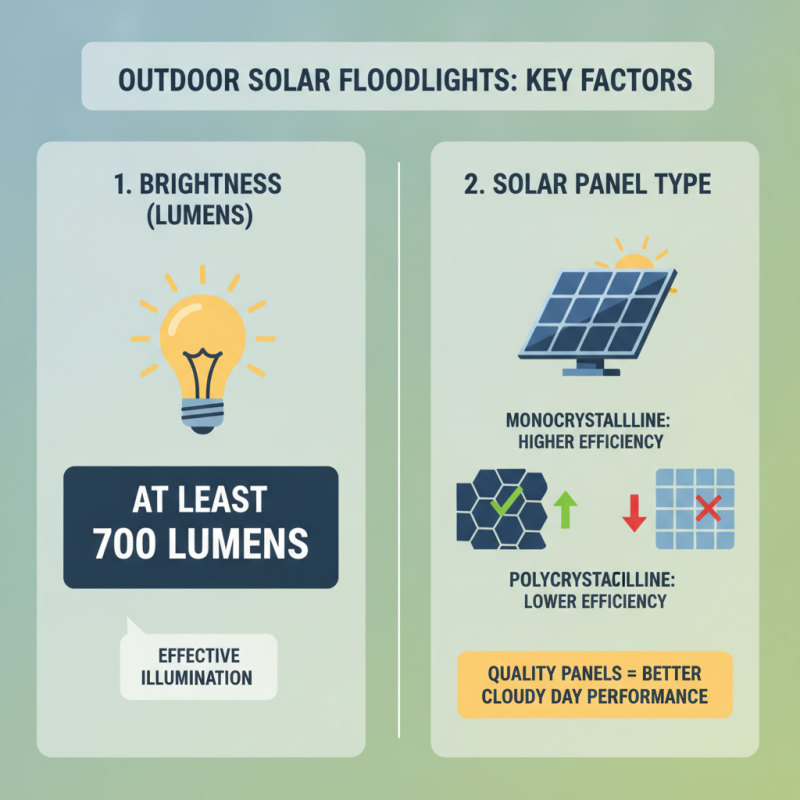
Choosing the right outdoor solar floodlights involves understanding key factors. Brightness is crucial; measured in lumens, higher numbers indicate brighter lights. For effective outdoor illumination, aim for lights providing at least 700 lumens. The type of solar panel also influences performance. Monocrystalline panels are more efficient compared to polycrystalline ones. Quality panels ensure better performance during cloudy days.
Battery capacity plays a vital role here. A longer-lasting battery can store more energy. This means your floodlights will remain operational even after a few cloudy days. Look for lights with batteries rated for at least 2000 mAh for continuous use. Also, check the materials used in the light's construction. Robust, weatherproof materials ensure durability against the elements.
Tips: Consider installation locations. Areas with direct sunlight receive more charge. Evaluate the design; adjustable solar panels enhance efficiency. Regular maintenance is often overlooked. Cleaning solar panels every few months can maximize their performance. Remember, poor installation may lead to inadequate lighting. Always assess the installation height and angle to optimize light distribution.
Understanding Different Types of Solar Floodlights and Their Efficiency
When selecting solar floodlights, it’s crucial to understand their types and efficiency. Solar floodlights come in various styles, including built-in battery systems and those with separate solar panels. Built-in systems are compact and easy to install. However, they often struggle in consistently cloudy weather. On the other hand, separate panel systems gather more sunlight, maximizing efficiency. They may require extra installation effort but often produce more reliable lighting.
Efficiency also varies based on solar panel quality and battery capacity. Higher-quality solar panels absorb more sunlight, leading to better performance during the night. Consider the LEDs used in these lights. LED bulbs are energy-efficient, providing brighter illumination while consuming less power.
Reflecting on the balance between cost and efficiency is essential. Some cheap models may not last long, leaving you frustrated and without adequate lighting. Evaluating both initial investment and long-term functionality can guide your decision. It might be tempting to choose the least expensive option, but lasting durability often saves money over time. Seek lights that meet your specific needs without sacrificing quality for price.
Comparison of Different Types of Outdoor Solar Floodlights
This chart compares the efficiency of different types of outdoor solar floodlights. Monocrystalline solar panels have the highest efficiency, while thin film panels have the lowest. Understanding these differences is essential for choosing the best solar floodlights for your home.
Key Features to Look for in High-Quality Solar Floodlights
When choosing outdoor solar floodlights, it’s crucial to focus on key features. First, consider the brightness output, measured in lumens. A good solar floodlight should have at least 800 lumens for effective illumination. According to the Solar Energy Industries Association, proper brightness ensures safety and visibility around your property.
Battery capacity is another vital factor. High-capacity batteries, usually in the range of 2000mAh to 4000mAh, can provide extended lighting hours after dark. It's important to check the solar panel's efficiency too. Look for panels with a conversion rate above 20%. This ensures that they charge quickly and perform well, especially in less sunny conditions.
Durability and weather resistance are often overlooked. Materials should withstand extreme temperatures, rain, and snow. IP ratings can give you an idea of water and dust resistance. An ideal rating is IP65 or higher. However, not every product meets these standards. Research manufacturer claims carefully, as some may overstate performance capabilities.
How to Choose the Best Outdoor Solar Floodlights for Your Home? - Key Features to Look for in High-Quality Solar Floodlights
| Feature |
Description |
Importance Level |
| Brightness (Lumens) |
Measured in lumens, indicates the brightness level of the floodlight. |
High |
| Battery Capacity |
Capacity of battery measured in mAh, affects duration of light. |
High |
| Solar Panel Efficiency |
Percentage of sunlight converted into electricity, affecting charging time. |
Medium |
| Durability |
Resistance to weather conditions, typically IP rating. |
High |
| Motion Sensor |
Detects movement to activate light, enhancing security. |
Medium |
| Adjustable Settings |
Ability to adjust brightness and motion sensitivity. |
Low |
| Installation Ease |
Complexity of installation, affects user convenience. |
Medium |
Comparative Analysis of Brightness Levels Measured in Lumens
When selecting outdoor solar floodlights, brightness is crucial. Brightness is commonly measured in lumens. The higher the lumens, the brighter the light. For instance, a floodlight with 1,000 lumens can illuminate a large backyard, while one with 300 lumens may only light up a small pathway. It's essential to consider the area you want to illuminate. Depending on your needs, you might require different brightness levels.
However, brightness isn't the only factor. Each outdoor space is unique and has varied lighting requirements. Sometimes, a bright floodlight can create harsh shadows, compromising visibility. This can be a concern in gardens or patios where ambiance is key. Think about how the light will complement your environment. Test different settings if possible. Experimenting can show which brightness works best.
Additionally, some users may prioritize energy efficiency over sheer brightness. Higher lumens consume more power, which could affect long-term costs. This decision might warrant evaluating your energy budget alongside your light needs. It's a continuous balance between brightness and efficiency. Always reflect on how well your choice meets both needs.
Evaluating Battery Life and Solar Panel Quality for Optimal Performance
When choosing outdoor solar floodlights, the battery life and solar panel quality are critical factors. A quality battery can provide sustained illumination during the night. Look for options with lithium-ion batteries, known for their longevity and efficiency. A longer lifespan means fewer replacements, which is both cost-effective and environmentally friendly.
Solar panel quality significantly impacts performance. High-efficiency panels capture more sunlight, converting it into energy faster. This is particularly important in areas with limited sunlight. Inspecting panels for durability is also wise. A robust panel will withstand harsh weather and continue performing well.
However, not all solar lights live up to their claims. Some may struggle in cloudy conditions. It is essential to read user reviews to gauge real-world performance. Look for details on how long lights stay lit after sunset. Verifying these aspects ensures you choose lights that meet your specific needs effectively.