How to Choose the Best Commercial Solar Security Lights?
In the ever-evolving landscape of security solutions, "Commercial Solar Security Lights" have emerged as a prominent choice for businesses. According to expert Jason Lee, a leading figure in energy-efficient technologies, “Effective security lighting is crucial for protecting commercial spaces.” His insights highlight a key consideration for any business owner.
Choosing the right solar security lights involves more than just picking a model off the shelf. Factors such as brightness, battery life, and solar panel efficiency play vital roles. For instance, a well-placed solar light can illuminate dark areas, deterring potential intruders. However, businesses often overlook the importance of installation angles and coverage areas, which can lead to inefficiencies.
As companies navigate their options, it’s crucial to reflect on specific needs. What areas require the most light? How often do the lights need maintenance? Addressing these questions ensures that the chosen lights serve their purpose effectively. Investing in "Commercial Solar Security Lights" can provide safety and peace of mind, but only with careful consideration of all elements involved.
Understanding the Importance of Commercial Solar Security Lights
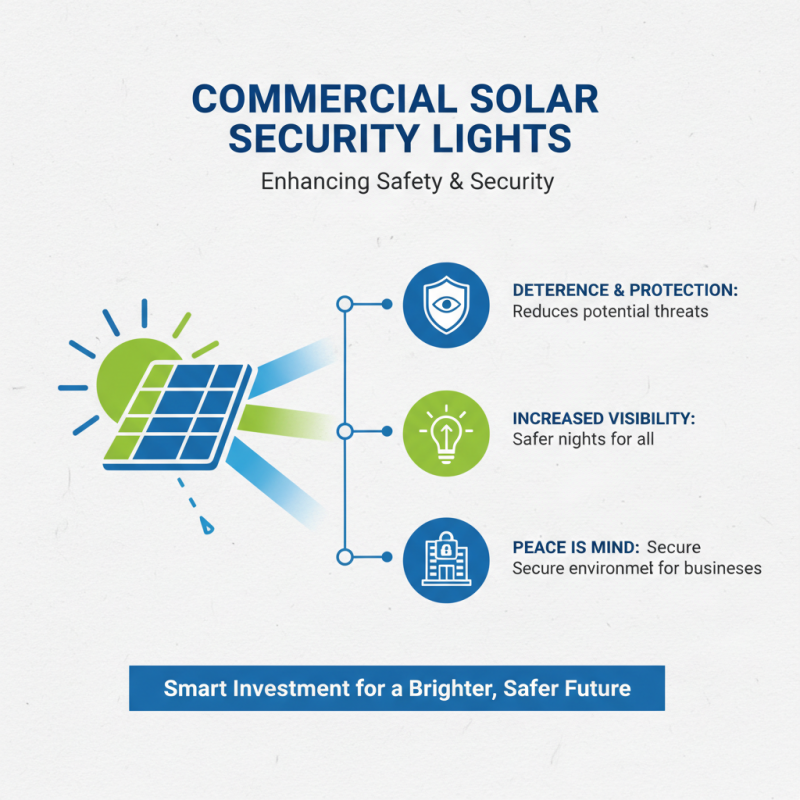
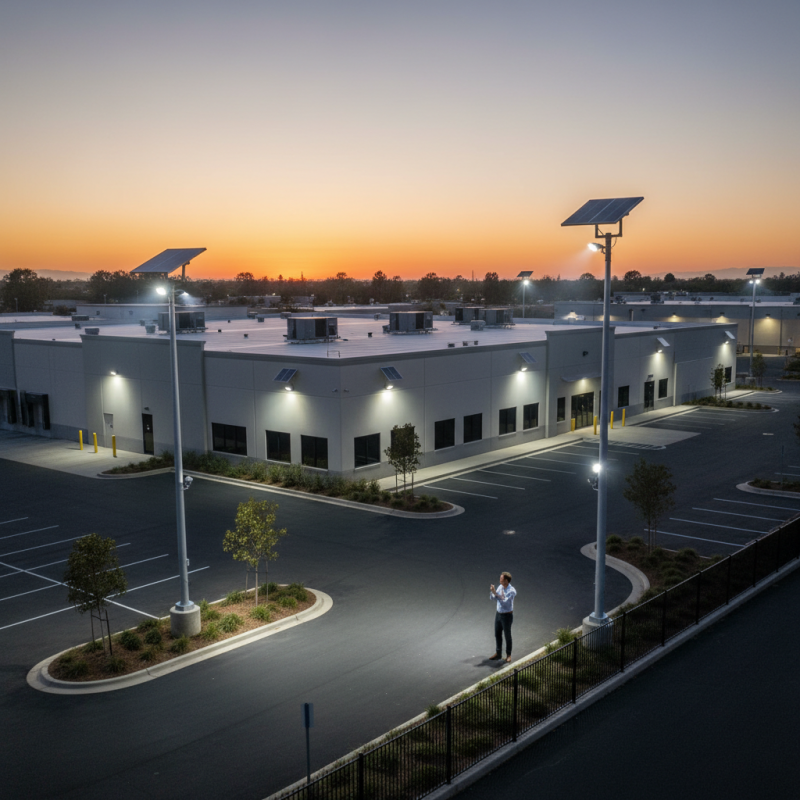
In a world where security is paramount, commercial solar security lights play a crucial role. They offer illumination and deter potential threats. When businesses invest in these lights, they create a safer environment for employees and customers. Proper lighting can enhance visibility during night hours, making incidents less likely.
Selecting the right solar security lights is essential. Consider the brightness and coverage area. Lights should provide sufficient illumination for large spaces. Also, think about the design. Sleek, unobtrusive lights blend in better. Weather-resistant materials enhance durability. This ensures the lights last longer, even in harsh conditions.
Tips: Ensure you check energy efficiency. An efficient system lowers operational costs. Look for lights with motion sensors. They conserve energy by activating only when needed. Consider user reviews to gauge performance. Feedback often reveals strengths and weaknesses. By doing your homework, you avoid costly mistakes.
Key Features to Consider When Choosing Solar Security Lights
When choosing solar security lights, several key features come into play. Brightness is essential. Look for lights with adjustable lumen outputs. A higher lumen count means better visibility. Additionally, consider the beam angle. Wider beams cover more areas effectively. This is crucial for larger properties.
The battery capacity also matters. A long-lasting battery ensures the lights stay on through the night. Check for solar efficiency too. Efficient panels charge faster, even on cloudy days. Motion sensors are another feature to think about. They help save energy by activating only when needed. Some models allow sensitivity adjustments. This helps avoid false triggers from animals.
Weather resistance is vital. Choose lights made of durable materials. They should withstand rain and snow. However, not all models handle extreme conditions well. It's worth reviewing customer feedback on durability. Lastly, ease of installation shouldn’t be overlooked. Complicated setups can lead to frustration. Look for options that offer simple mounting solutions. Make sure the lights fit your unique needs.
Comparing Different Types of Solar Security Lights
When comparing different types of solar security lights, it’s important to consider several factors.
Motion sensor lights are popular for areas where security is critical. They activate when motion is detected, providing immediate illumination.
According to a report from the Solar Energy Industries Association, solar-powered lights can reduce energy costs by up to 70%.
This can be crucial for businesses aiming to control operational expenses.
Flood lights are another option. These lights offer broad illumination, making them ideal for parking lots or pathways.
However, their installation may require more precise positioning. A study by the Department of Energy found that properly placed solar flood lights can deter criminal activity by 30%.
This serves as a reminder that installation plays a key role in effectiveness.
Solar garden lights, while less intense, can still enhance security. They create a welcoming atmosphere and improve visibility.
Yet, their lower brightness means they may not be suitable for all areas. It’s essential to weigh the function of security lights against the visual appeal when making a choice.
Evaluating Performance: Brightness and Battery Life Explained
When evaluating solar security lights, brightness and battery life are crucial factors. Brightness is typically measured in lumens. According to industry data, effective security lights should produce at least 700 lumens. This level of brightness ensures visibility over a wide area. However, brightness alone is not enough. It is essential to consider how long these lights can run on battery power.
Battery life can vary significantly. Most solar lights with high-quality batteries last around 8 to 12 hours. But, many lower-quality options may only work for 4 to 6 hours. This short battery life can leave dark spots in your security coverage. Look for lights that use lithium-ion batteries as they tend to last longer and recharge faster. A report from the Solar Rating and Certification Corporation highlights that efficient solar panels can collect more energy and enhance battery performance, leading to superior light output.
Another aspect to consider is the efficiency of solar panels. Not all panels are created equal. The average solar panel efficiency ranges between 15% to 22%. Higher efficiency leads to better energy absorption during the day. However, a poorly designed solar light might not utilize its panel effectively. This mismatch can lead to inconsistent performance. The need for continuous improvement in design is evident as many products struggle to balance brightness and battery life.
Performance Evaluation of Commercial Solar Security Lights
This chart illustrates the average performance metrics of commercial solar security lights, focusing on brightness measured in lumens and battery life measured in hours. These two factors are crucial for evaluating the effectiveness of solar security lights.
Budgeting for Commercial Solar Security Lighting Solutions
Budgeting for commercial solar security lighting can be daunting. Many businesses underestimate installation costs. According to a recent report by the Solar Energy Industries Association, the average installation cost for solar lighting solutions ranges from $5,000 to $10,000. This figure can vary based on the complexity of the project and the number of units needed.
It's crucial to consider long-term savings. Investing in solar security lights can save money on energy costs. The same report indicates that businesses can save up to 80% on energy bills with solar-powered fixtures. However, the initial investment can be a hurdle. Many may feel hesitant, fearing unforeseen expenses. Proper planning is essential to avoid budget overruns. It’s worthwhile to create a detailed budget, including maintenance costs and potential upgrades.
Evaluate financing options as well. Some companies offer leasing plans or incentives for solar installations. This can alleviate upfront costs, making it manageable. On the other hand, not all financing options may work for every business. Consider your specific needs and analyze your financial situation. Balancing immediate costs with long-term benefits is key.
How to Choose the Best Commercial Solar Security Lights? - Budgeting for Commercial Solar Security Lighting Solutions
| Feature |
Description |
Estimated Cost ($) |
| Brightness |
Measured in lumens; higher lumens indicate brighter lights ideal for security. |
150 - 500 |
| Battery Life |
Duration that the light can operate on a full charge. |
100 - 300 |
| Solar Panel Efficiency |
The ability of the solar panel to convert sunlight to energy. |
50 - 200 |
| Motion Sensor Range |
Distance within which the motion sensor detects movement. |
80 - 250 |
| Durability Rating |
Indicates the light's resistance to weather conditions. |
10 - 50 |
| Installation Type |
Options include wall-mounted, pole-mounted, or portable. |
0 - 100 |
| Warranty Period |
Length of time the light is guaranteed against defects. |
0 - 100 |